

Subversion Instead of Elections, Part I: The Laptop, the Platforms, and the Intelligence Letter
SUBVERSION INSTEAD OF ELECTIONS — PART I What Kennedy warned about in 1961, and how the architecture operated in 2020

Kennedy used four phrases in one paragraph at the Waldorf Astoria on April 27, 1961, and most Americans remember only the first.
· Infiltration instead of invasion.
· Subversion instead of elections.
· Intimidation instead of free choice.
· Guerrillas by night instead of armies by day.
Each phrase described a substitution. Each substitution replaced an overt mechanism with a covert one. The covert form is harder to identify, harder to prove, and harder to resist precisely because it operates indirectly.
Kennedy understood the methodology because he had just experienced part of it during the Bay of Pigs disaster. What he recognized in 1961 was not simply military covert action, but the emergence of systems capable of shaping political outcomes through information, institutions, and perception rather than direct force.
65 years later, one of those phrases became impossible to ignore.
“Subversion instead of elections” names something specific.
It does not mean ballot stuffing or manipulated vote totals. Subversion operates upstream of voting itself. It means shaping the information environment before ballots are cast so that voters encounter only a managed range of acceptable outcomes.
The process works through multiple layers:
Information suppression
Institutional framing
Media coordination
Platform control
Credentialed validation
Timed narrative deployment
By the time citizens enter the voting booth, much of the decision-making environment has already been constructed for them by actors they neither elected nor authorized.
That methodology did not originate domestically. It was refined abroad for decades first. But to what end?
The Church Committee documented the pattern in 1976.
Research by Carnegie Mellon political scientist Dov Levin later identified 117 confirmed cases of U.S. electoral intervention in foreign countries between 1946 and 2000.
The operational framework became familiar:
Identify the favored outcome
Shape the information environment
Marginalize destabilizing narratives
Use media and institutional credibility to influence perception
Intervene late enough that counter-narratives cannot recover
Italy in 1948 became the foundational case. The methodology evolved from there.
By 2020, the same operational logic had emerged within the United States itself.
THE FIRST PIECE
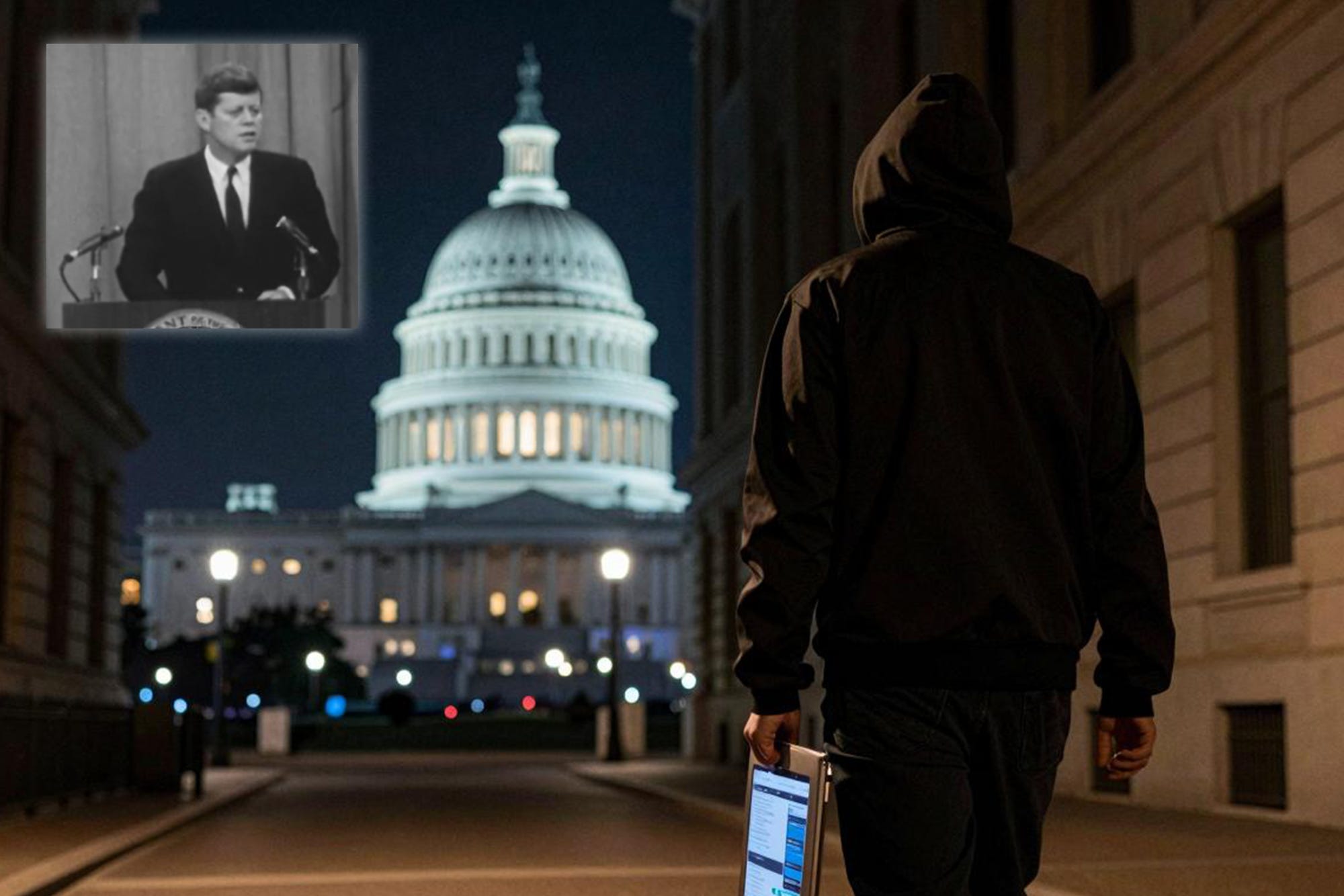
April 2019. Hunter Biden walks into a computer repair shop in Wilmington, Delaware.
The shop owner, John Paul Mac Isaac, later testified that Biden dropped off three water-damaged laptops for data recovery and never returned to retrieve them. Under Delaware law, abandoned property is transferred to the business after ninety days.
Mac Isaac examined the contents and found emails, financial records, and overseas business communications involving Ukraine and China. Believing federal authorities should review the material, he contacted the FBI.
The FBI took possession of the laptop on December 9, 2019, through a subpoena issued by the U.S. Attorney for the District of Delaware. The chain of custody was documented.
The federal government now possessed authentic material involving the son of a presidential candidate. What did they intend to do with it?
Months passed without public disclosure.
Meanwhile, impeachment proceedings against President Trump unfolded in part around questions about Ukraine. The laptop remained in FBI custody while the public remained unaware of its contents.
In August 2020, Mac Isaac contacted Rudy Giuliani’s attorney. A copy of the hard drive was transferred, and Giuliani later provided it to the New York Post.
On October 14, 2020, three weeks before the presidential election, the Post published its first article:
“Smoking-gun email reveals how Hunter Biden introduced Ukrainian businessman to VP dad.”
The reporting was grounded in authentic material. The chain of custody, while politically explosive, was documented from the repair shop forward. The Post publicly stood by the story.
This was precisely the kind of information voters were supposed to evaluate before an election.
THE SECOND PIECE
Within 24 hours, the story effectively disappeared from the digital public square.
Blocked users from sharing the article entirely. The New York Post’s own account was locked. Direct messages containing the story were blocked under the company’s “hacked materials” policy, despite no evidence that the material had been hacked.
Simultaneously reduced distribution of the article pending third-party “fact-checking.” No factual determination that the reporting was false ever emerged.
· Major broadcast networks and national newspapers
Declined to treat the reporting as legitimate investigative journalism. Instead, much of the press framed the story as possible Russian disinformation despite lacking evidence to support the claim.
A factually accurate report from a major American newspaper had been institutionally neutralized during the final weeks of a presidential election.
THE THIRD PIECE
Five days later, the intelligence community entered the operation publicly.
On October 19, 2020, 51 former senior intelligence officials signed a letter asserting that the Hunter Biden laptop story had “all the classic earmarks of a Russian information operation.”
The signatories included:
John Brennan
James Clapper
Michael Hayden
Leon Panetta
Michael Morell
Four additional former CIA directors and acting directors
Dozens of other senior intelligence alumni
Buried within the letter was a caveat admitting they possessed no direct evidence of Russian involvement. The political effect, however, was unmistakable.
The message reaching the public was simple: The story was foreign disinformation.
The facts show it was not foreign disinformation.
Subsequent federal investigations, criminal proceedings, and forensic reviews confirmed the authenticity of the laptop and its contents.
Then came the most consequential revelation.
In 2023, former acting CIA Director Michael Morell testified before Congress that the letter had been organized following outreach from Antony Blinken, then a senior advisor to the Biden campaign and later Secretary of State.
Read that carefully.
A presidential campaign facilitated the organization of a public intelligence-community statement designed to frame authentic information about its opponent as foreign disinformation weeks before an election.
The methodology mirrored the exact operational logic historically used in foreign electoral influence campaigns. The practice was not new.
THE FOURTH PIECE
The mechanism itself became visible only later.
After purchasing Twitter in 2022, Elon Musk authorized journalists, including Matt Taibbi, Bari Weiss, and Michael Shellenberger, to review internal company communications. The releases became known as the Twitter Files.
The records document sustained coordination between social-media companies and federal agencies, particularly the FBI’s Foreign Influence Task Force.
One name appeared repeatedly: Elvis Chan.
The FBI had spent months warning platforms about an anticipated Russian disinformation operation involving Hunter Biden.
Those warnings occurred despite the Bureau already possessing the laptop itself since December 2019.
Internal Twitter communications later showed executives explicitly referencing prior FBI warnings as they decided to suppress the New York Post story. Employees reviewing the actual article struggled to identify policy violations justifying censorship.
The suppression was driven less by the article’s contents than by the narrative framework already installed around it.
The platforms had been primed in advance to react exactly as they did.
Step back and observe the structure now emerging.
Authentic information existed
Federal authorities possessed evidence
Platforms suppressed the reporting
Media institutions framed it as foreign influence
Intelligence officials validated the framing publicly
Voters encountered a managed information environment during the final weeks before an election
This was not one isolated decision. It was a synchronized informational response distributed across multiple institutions simultaneously.
And this is only the first half of the picture. Are you ready to read the full story? Join me on Monday for the conclusion!
-Mel K
COMING IN PART II
In Part II, we examine the final pieces of the operation:
The Time magazine article openly celebrating the coordinated “shadow campaign”
The documented overlap between media, labor, nonprofits, tech platforms, and political organizations
The constitutional implications of coordinated information management during elections
Why Kennedy’s phrase “subversion instead of elections” may describe the modern operational model more accurately than Americans realize
Once the remaining pieces are assembled, the methodology becomes impossible to unsee.
If you value structural analysis that examines the systems operating beneath American political life, subscribe and share.
Clear thinking. Documented patterns. No shortcuts.
Mel K, your excellent documentation of the 2020 election history is important and very much appreciated.
Hi, I love your work! If you agree with this would you consider pushing it on your feed? Ty!!
https://onemillionmoms.com/current-campaigns/the-fcc-is-giving-us-more-time/?fbclid=IwZnRzaASG5ylleHRuA2FlbQIxMQBzcnRjBmFwcF9pZAo2NjI4NTY4Mzc5AAEeeoirE5P8pym-naDUxq1as76FeWoi3zrPyqz-3oumUG_3Zth-9cqAX-KxrLY_aem_pLTjb1a5uyjTshoZ3UlEyg