

What Happens When Compassion Becomes an Industry?

Billions spent. Thousands of programs. More people on the streets than ever before.
At some point, the question is no longer whether we care — but whether the systems built in the name of caring have become the reason nothing changes.

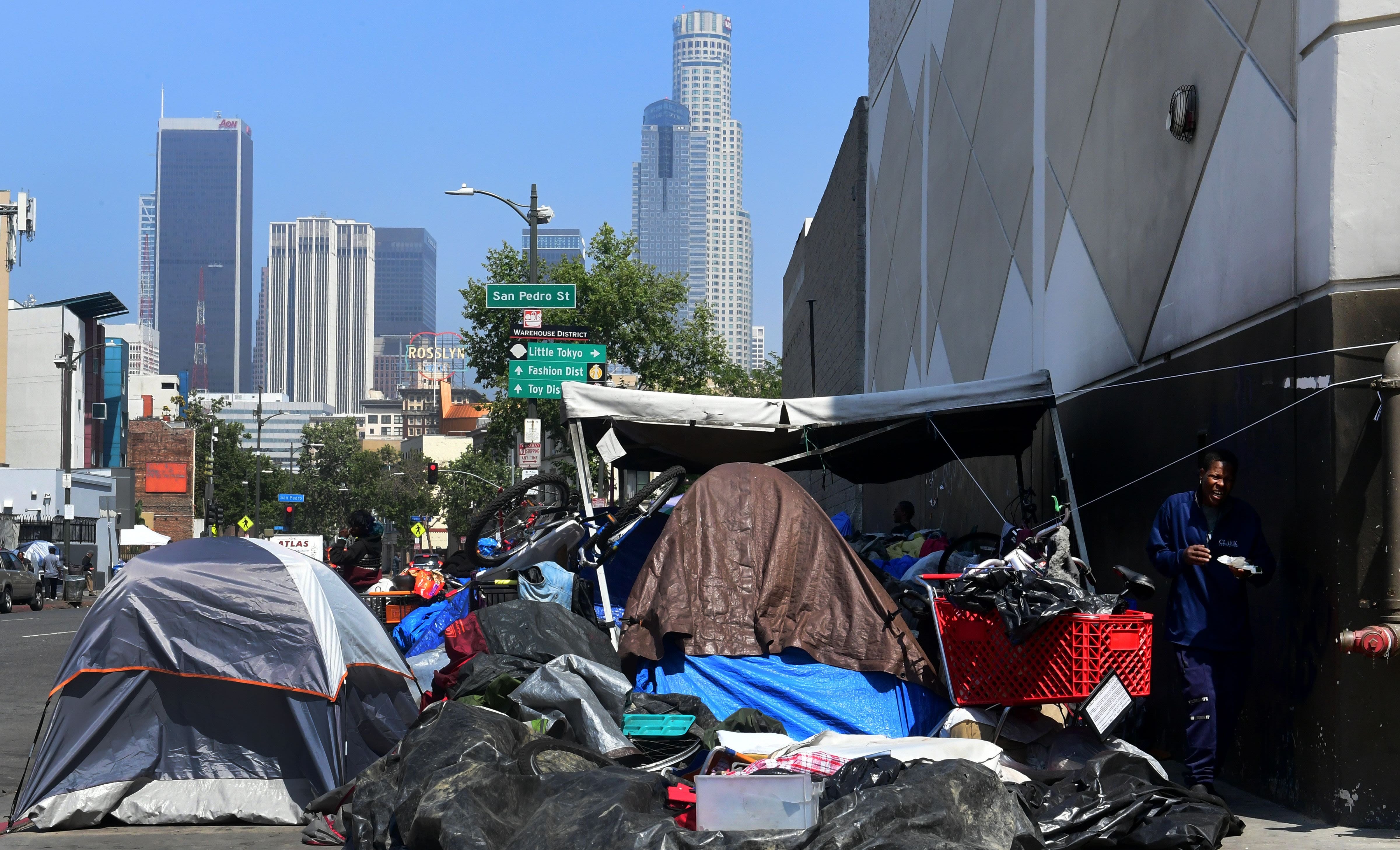
In the early light of a city not yet fully awake, the outlines are clearer. Before the traffic rises to its familiar pitch, before the noise reconstitutes the day's familiar arrangements, there is a brief interval in which the architecture of things — both physical and invisible — can be seen without distraction. A man sits cross-legged on a sidewalk in Los Angeles, speaking in a low, steady cadence to someone who does not answer. Nearby, a woman arranges her belongings with deliberate care, folding blankets, stacking bags, imposing the only order available to her on circumstances that will not hold it.
By mid-morning, the city will move around them. By evening they will still be there. Not as anomalies. As evidence.
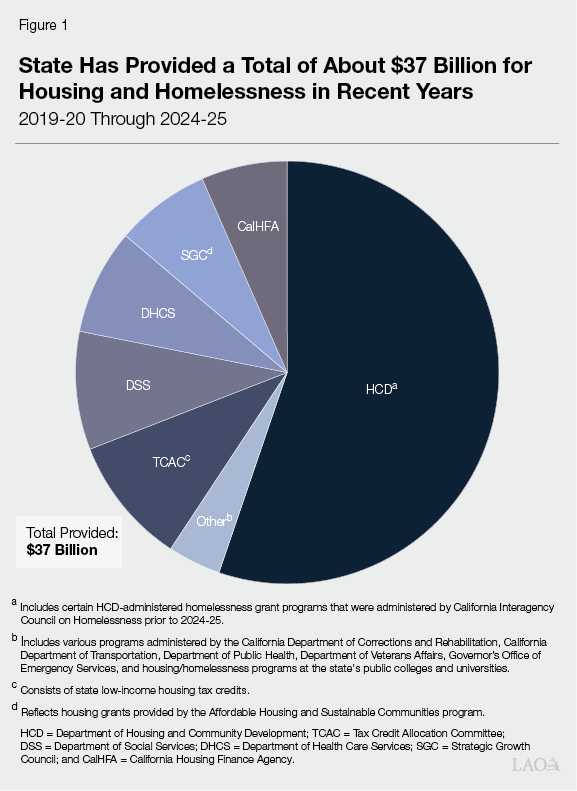
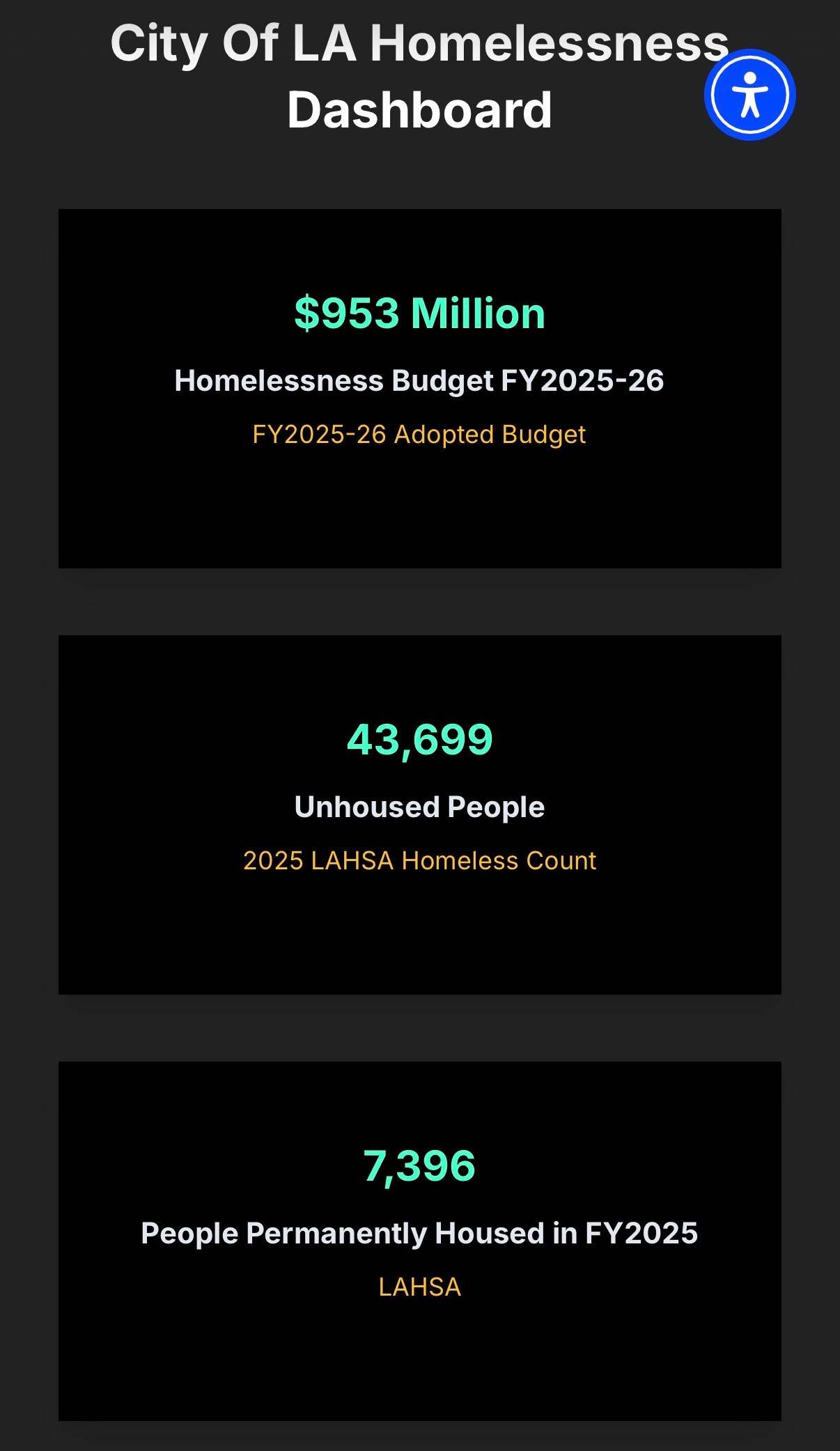
What makes these scenes remarkable in 2026 is not that they exist. It is what surrounds them. In the same city, in the same fiscal year, more than $845 million in public funds flowed through a single county agency tasked with ending precisely this. The state of California, over the five years prior, directed $37 billion — thirty-seven billion dollars — toward homelessness, mental illness, and substance use. In November 2024, Los Angeles County voters approved yet another measure: a dedicated sales tax expected to generate $1 billion a year, permanently, for homelessness services.
The man on the sidewalk does not know any of this. Neither, it appears, does the system spending the money.
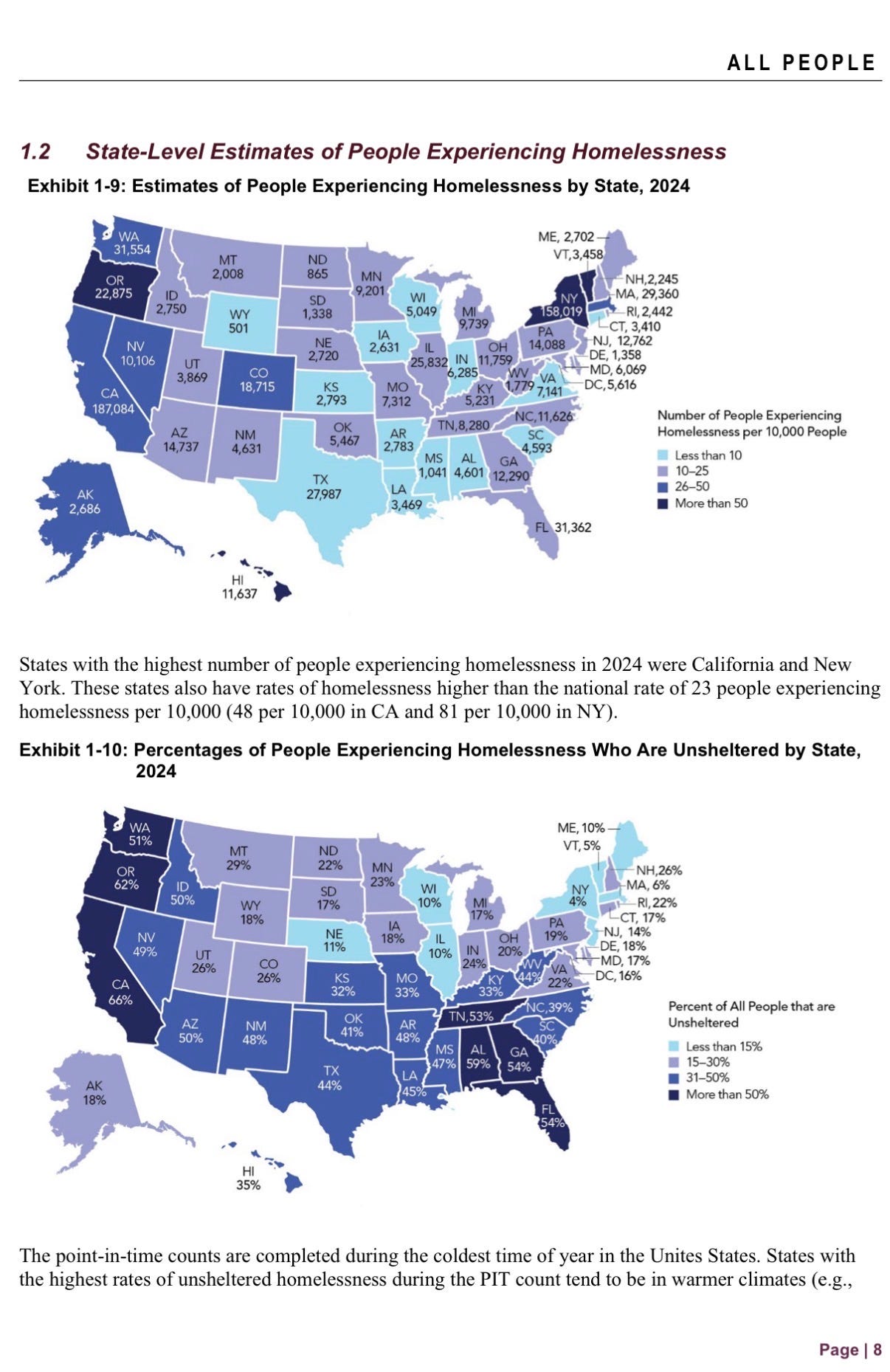
According to federal data, more than 770,000 people were experiencing homelessness on a single night in January 2024 — the highest number ever recorded in the United States, an increase of eighteen percent in a single year. The year before had seen a double-digit rise. The year before that, the same.
These numbers exist alongside a homelessness-services industry — and it is an industry — of extraordinary scale. Thousands of nonprofit organizations. Dozens of federal, state, and local programs. Managed care giants administering billions in Medicaid behavioral health contracts. Foundations and donor-advised funds channeling hundreds of millions more. A workforce of outreach workers, case managers, program administrators, data coordinators, compliance officers, and executive directors, many earning salaries that would surprise the taxpayers whose money funds them.
The trajectory is unambiguous. More money. More programs. More people on the street. At some point, the honest question is not whether the system is trying. It is whether the system is designed to succeed.
The California State Auditor — not a political critic, not an ideological opponent, but the state's own oversight body — reviewed California's homelessness spending in April 2024 and released the first comprehensive accounting of where the money had gone and what it had bought. The findings were stark. Of five major programs examined, only two could demonstrate cost-effectiveness. For a third program, one of the state's primary funding mechanisms, nearly a third of participants who left housing placements left for destinations the system recorded simply as "unknown." The state did not know where they went. It authorized billions more in funding for the same program anyway.
The California Interagency Council on Homelessness — created specifically to coordinate and track homelessness spending — had not analyzed any expenditure data beyond 2021, despite billions in subsequent appropriations. In San Jose and San Diego, auditors found that neither city could provide a complete accounting of what had been spent or where. A $1.6 million shelter contract in San Diego did not specify how many people it was supposed to serve, making evaluation not merely difficult but structurally impossible.
Assemblymember Josh Hoover, a Republican from Folsom who had requested the audit, said upon its release: "The lack of transparency in our current approach to homelessness is pretty frightening." Governor Newsom subsequently vetoed a bill that would have required annual evaluations of homelessness spending. His office said he supported transparency — just not in that form, not right now.
Los Angeles County voters approved the $1 billion annual measure in November 2024. The county auditor's most critical report on the agency that would spend it was released two weeks after the election.
How the Money Moves — and Where It Stops
To understand why outcomes are so difficult to trace, it helps to follow the money as it moves. Federal dollars — from HUD, from Medicaid, from SAMHSA block grants — flow first to state agencies, then to county administrators, then outward to a dense ecosystem of contracted nonprofit providers and their subcontractors. The Government Accountability Office has documented this fragmentation repeatedly: programs overlap, coordination is inconsistent, and no single entity in the chain is consistently responsible for the final result.
In Los Angeles, that intermediary layer is embodied by LAHSA — the Los Angeles Homeless Services Authority, a joint city-county agency established in 1993 to coordinate the region's homelessness response. Between 2015 and 2022, LAHSA's budget increased thirteenfold, from $63 million to $808 million. Over the same period, homelessness in Los Angeles increased. A 2025 assessment commissioned by federal judge David O. Carter — who had been presiding over a lawsuit concerning homelessness conditions in Los Angeles — found fragmented data systems, missing outcome records, and an inability to track what the money had purchased across four years of operations. Judge Carter described what he found as a train wreck.
The train had been well funded. It simply had not been going anywhere in particular.
A system that measures activity will optimize for activity. What is most easily tracked — beds funded, individuals enrolled, outreach contacts logged — is what gets reported, what gets reimbursed, and what gets renewed. What is hardest to track — sustained housing stability, long-term sobriety, permanent exit from homelessness — is what gets left out of the ledger.
This is not conspiracy. It is incentive structure. Managed care organizations are reimbursed for ongoing service delivery. Nonprofit contractors are funded on program participation. No one in the chain is financially rewarded for the client who no longer needs the service. The system has no mechanism for its own obsolescence — and therefore no interest in achieving it.
What the system has built, in the absence of outcome accountability, is infrastructure. Coordination layers. Case management systems. Data platforms that track movement without tracking progress. Outreach teams whose metric of success is contact, not resolution. The result is an institution in equilibrium: active, expansive, and stable — while the people it was designed to help cycle through its programs and remain.
The Infrastructure That Was Never Built
While coordination infrastructure expanded, something else was quietly disappearing. Over the past half-century, the United States reduced its capacity for long-term psychiatric care and residential treatment by an order of magnitude. State psychiatric hospitals closed. Detoxification beds were cut. Long-term residential treatment programs — the kind of structured, sustained environments where people with serious mental illness and addiction disorders can stabilize over months, not days — became scarce in every major American city.
What replaced them was a system built for engagement, not resolution. Outpatient services. Temporary shelters. Housing-first placements into units without the wraparound clinical support that housing-first's own architects acknowledged was necessary for the model to work. A safety net reengineered as a revolving door.
The veteran homelessness programs are instructive by contrast. When the federal government set clear outcome targets — measurable reductions in veteran street homelessness — and tied funding accountability to those targets, numbers dropped. Not everywhere, not fast enough, not to zero. But the trajectory reversed. The lesson the rest of the system has not drawn from that example is the one staring directly at it: defined outcomes, tracked rigorously and funded accordingly, produce different results than activity metrics tracked in isolation.
The majority of people experiencing chronic homelessness in America today are dealing with serious mental illness, substance use disorders, or both. The system surrounding them is optimized for housing placement. It is not resourced for the psychiatric stabilization, medically supervised detoxification, or long-term structured recovery that the actual population requires. This is not a secret. It appears in every serious audit of every serious homelessness program in the country. It has appeared in these audits for decades. And yet the infrastructure gap remains — because building psychiatric hospitals and residential treatment facilities is expensive, unglamorous, and politically difficult in ways that funding another nonprofit coordinator is not.
Who Gets Paid
Alongside the public apparatus runs a parallel economy that deserves its own accounting. A review of IRS filings by the investigative publication Westside Current found that thirty Los Angeles nonprofits holding LAHSA contracts paid a combined $34.7 million in executive compensation in a single year — while several of those same organizations posted net operating losses. The CEO of PATH, one of the region's largest service providers, received an eight percent raise the year the organization reported more than five million dollars in losses. Annual salary: over $400,000.
Va Lecia Adams Kellum, LAHSA's chief executive, earned $430,000 a year — a figure City Councilmember Monica Rodriguez publicly noted exceeded the salary of the mayor of Los Angeles. In February 2025, the investigative outlet LAist reported that Adams Kellum had signed more than $2.1 million in federal contracts with a nonprofit whose director of operations was her husband, Edward Kellum. LAHSA's own ethics rules had explicitly prohibited her from signing such agreements. Her agency described the signatures as an inadvertent oversight. An outside investigation was commissioned. She resigned.
And then there is Alexander Soofer.
Soofer ran a nonprofit called Abundant Blessings. He was contracted by LAHSA to provide housing, three nutritious meals a day, and comprehensive services to more than 600 people experiencing homelessness in Los Angeles County. According to charging documents filed in January 2026 by both the Los Angeles County District Attorney and federal prosecutors, he instead diverted more than $23 million in public funds — to the down payment on a home in Westwood, his children's private school tuition, trips to Las Vegas, stays at luxury resorts in Hawaii and Florida, and travel on private jets. He fabricated bank statements and subcontractor invoices to conceal the diversions.
District Attorney Nathan Hochman, at the press conference announcing the charges, noted that unlike the homeless individuals Soofer had allegedly stolen from, the defendant "will have shelter and get three nutritious meals a day in prison."
Alexander Soofer has been charged but not convicted. All charges against him remain allegations.
In May 2025, a LAHSA commissioner named Justin Szlasa visited a city-funded "safe sleep" site called Lincoln Safe Sleep Village — one of the signature locations of Mayor Karen Bass's Inside Safe initiative, the administration's centerpiece program for moving people off encampments. What Szlasa found was a lot with tents on one section and 44 bare wooden platforms on the other: structures with no tents, no occupants, paid for at full rate. By his calculation, $186 per night per tent. Occupied or not.
Judge Carter, when the discrepancy surfaced in his courtroom, called it obvious fraud. The city's explanation was that the operator had been warned of budget cuts and had removed the tents in anticipation. Mayor Bass's Inside Safe program, court filings show, costs $6,900 per participant per month. It does not build permanent housing. It places people in motels while permanent placements are sought. One woman interviewed by CNN had been in an Inside Safe motel room for nearly 200 days. There was not yet, she said, even a plan to move her somewhere permanent.
These are not the stories of a system that has failed to try. They are the stories of a system that has learned to sustain itself — and learned, in the process, that sustainability and resolution are not the same thing.
The Architecture of Persistence
Here is what the record shows, read plainly and without the softening instinct of institutional deference:
The United States has spent, at the federal level alone, hundreds of billions of dollars on homelessness-adjacent services over the past two decades. Thousands of nonprofit organizations have been created, funded, expanded, and renewed to administer those services. Foundations have added hundreds of millions more. Managed care corporations have built entire behavioral health divisions on Medicaid reimbursements for homeless populations. And across that entire architecture — the programs, the contracts, the coordination bodies, the data systems, the executive suites — the number of people sleeping on American streets has gone up, not down.
This is not a failure of compassion. The people who built these systems, who work within them, who advocate for their funding — most of them are driven by genuine concern for human suffering. That is not in question. What is in question is something more structural and therefore more difficult to confront: whether the systems built in the name of compassion have become, over time, more invested in their own continuation than in the resolution of the problem that justified them.
A system organized around continuity of service will produce continuity of service. It will not automatically produce an end to the need for service — because ending the need for service would end the system. This is not a conspiracy. It is the ordinary logic of institutional self-preservation, operating across thousands of organizations, none of which is individually responsible for the aggregate outcome, and none of which has a structural incentive to be.
The result is institutional equilibrium at the expense of human resolution. Budgets grow. Reports are filed. Audits document the gaps. New agencies are created to fix old agencies. And in every major American city, the scenes persist — unchanged in their essential character by the billions that have passed through the system around them.
What We Owe the People the System Has Not Reached
There is a harder question underneath all of this — one that the audit findings and the fraud prosecutions and the federal court orders and the budget analyses all circle without quite landing on.
If we accept, as the record compels us to accept, that thirty years of expanding investment have not produced proportional reduction in suffering — then the question is not only what the system should do differently. The question is what we, as the public that funds it, as the citizens of a republic that presumes our involvement, are willing to do differently.
Because the comfortable response to evidence of institutional failure is to demand institutional reform. More accountability. Better metrics. New oversight bodies. Different contractors. Another reorganization. Los Angeles County pulled $300 million from LAHSA in April 2025 and created a new department. The structural incentives that shaped LAHSA did not transfer with the money. They never do when the solution is more architecture.
The uncomfortable response is to ask whether the architecture itself is the problem.
Across the country, quieter models exist that deserve honest examination. Small-scale recovery housing built on direct relationships rather than government contracts. Faith-based treatment programs that operate outside the reimbursement system and are therefore free of its incentive structures. Community-led efforts measuring success the only way that matters: by knowing, by name, what is happening to the people in front of them. These models are not perfect. They are not infinitely scalable. But they are producing something the billion-dollar system is not consistently producing — people who recover, stabilize, and do not return.
The lesson is not that government has no role. It is that government contracting, at sufficient scale and sufficient remove from outcome accountability, tends to produce the thing it measures rather than the thing it claims to seek. That pattern is not unique to homelessness. It appears in every domain where public money flows through intermediary institutions without being anchored to results that can be independently verified and honestly reported.
We have known this for decades. The audits have been saying it. The oversight bodies have been saying it. The fraud prosecutions say it in the starkest possible terms. And every year, the response has been to fund the same architecture more generously, demand the same metrics more loudly, and express the same concern more urgently — while the man on the sidewalk continues his conversation with someone who does not answer.
At some point, the question history will ask is not whether the system meant well. It will ask whether we, knowing what the record showed, demanded something better — or whether we funded the industry and called it compassion.
The people sleeping on American streets in 2025 are not a policy problem awaiting a technical solution. They are human beings with names and histories and the specific, urgent need for clinical care, stable shelter, and sustained human relationship that no case management software and no coordinating committee and no amount of enrollment data has ever been able to substitute for.
They needed psychiatric beds. They got coordination systems. They needed detox facilities. They got managed care contracts. They needed long-term treatment. They got temporary placements in motels at $6,900 a month, billed to a federal judge's oversight process as progress.
This is what the record shows.
All of it is in the public archive.
None of it is hidden.
The only question that remains is whether we are willing to read what it means — and whether, having read it, we are willing to act as if it matters.
Not by funding another program.
By demanding that the next dollar spent be tied to a question the system has spent thirty years avoiding:
Did anyone actually get better?
And if not —
why are we still paying for this?
Mel K is a historical investigative journalist, screenwriter, and the host of The Mel K Show. Her forthcoming book, Infiltration Instead of Invasion: America Betrayed 1944–1954, examines how postwar financial, intelligence, and governance architectures quietly reshaped American sovereignty.
Sources: California State Auditor, Report 2023-102.1 (April 2024) · Alvarez & Marsal independent audit, commissioned by U.S. District Judge David O. Carter (March 2025) · L.A. County Auditor-Controller Report on LAHSA (November 2024) · L.A. County District Attorney Office press release, Soofer charges (January 2026) · LAist investigative reporting on Adams Kellum (February 2025) · Westside Current IRS filing analysis (October 2025) · CalMatters homelessness spending analysis (April 2024) · LA Daily News, county restructuring (February 2026) · HUD Annual Homeless Assessment Report (2024) · Government Accountability Office, homelessness coordination reports.